Living in your RV full-time means embracing all four seasons—including winter. Whether you’re stationed at an RV park in Texas or weathering colder climates up north, winter RV living requires preparation that goes beyond casual camping. One burst pipe or failed heating system can turn your comfortable living situation into an expensive emergency.
The good news? With proper preparation and a few strategic adjustments, winter RV living can be just as comfortable as any traditional home. You don’t need to migrate south or drain your savings on propane. You just need to understand how your RV functions in cold weather and take proactive steps to protect your investment and your comfort.
At RV Depot in Cleburne, Texas, we work with full-time RV residents every day who are navigating winter RV living challenges. We understand that your RV isn’t a weekend getaway vehicle—it’s your home. That’s why we’ve compiled this comprehensive guide to help you navigate the challenges of winter RV living with confidence.
Understanding Your RV’s Vulnerabilities in Cold Weather
Before the first freeze hits, you need to know exactly how your RV handles cold temperatures. Successful winter RV living starts with understanding your specific RV’s vulnerabilities. Not all RVs are built the same, and understanding your specific model’s strengths and weaknesses could save you thousands in repair costs during winter RV living.
Know Your Water System Layout: The single most important thing you can do is locate every water tank and water line in your RV. Pull out your owner’s manual and physically trace where your fresh water, gray water, and black water tanks are positioned. Are they in heated compartments, or are they exposed to exterior temperatures underneath your RV?
Many RVs have tanks and plumbing located in areas that benefit from residual heat from your living space. Others—particularly older models or budget builds—have exposed underbelly areas that are highly susceptible to freezing. If you don’t know which category your RV falls into, you’re gambling with expensive repairs.
Assess Your Insulation: Check the R-value of your RV’s insulation if possible. Walk around your RV on a cold day and feel for cold spots near windows, doors, and exterior walls. These are the areas where heat escapes and cold air infiltrates. Understanding where your RV loses heat helps you prioritize your winterization efforts.
Critical Water System Protection Strategies
Frozen pipes are the number one disaster for full-time winter RV living residents. When water freezes inside your lines, it expands and can crack pipes, rupture fittings, and damage tanks. Here’s how to prevent that nightmare scenario during winter RV living.
Determine Your Freezing Risk and Winterization Needs
If you’re living anywhere that experiences temperatures below 32°F, you need a winterization plan. This doesn’t mean you can’t use your water system—it means you need to protect it strategically.
Full Winterization Option: If you’re facing extended periods of hard freezes, consider fully winterizing your water lines with RV antifreeze. You can still maintain full bathroom functionality using water jugs for flushing and adding antifreeze to your holding tanks to prevent freezing. Many full-timers find this method more reliable than constantly worrying about overnight temperature drops.
Heated Protection Option: If you have heated compartments or can add heat sources, you might maintain normal water usage with careful monitoring. However, this requires vigilance and backup plans for power outages or heater failures.
Keep Cabinet Doors Open for Heat Circulation
This simple trick makes a tremendous difference. Never close cabinet doors or drawers where water lines are located during freezing weather. Your interior heat needs to circulate around all plumbing to keep pipes above freezing temperatures.
Open every cabinet under sinks, around the toilet pedestal, and anywhere else pipes run. Yes, it looks cluttered, but it prevents thousands in repair bills. The heat from your living space will naturally flow into these areas and protect your plumbing.
Smart Water Hose Management
Never store water hoses with water still inside them. Even in a heated bay, water-filled hoses are freeze risks. When you disconnect from a water source, elevate one end of the hose and let all water drain out completely before storing it.
If you do find yourself with a frozen hose, bring it inside your RV to thaw slowly, or carefully use a hair dryer on low heat to thaw sections gradually. Never use high heat or open flames—you’ll melt or damage the hose.
Consider Heated Water Hoses
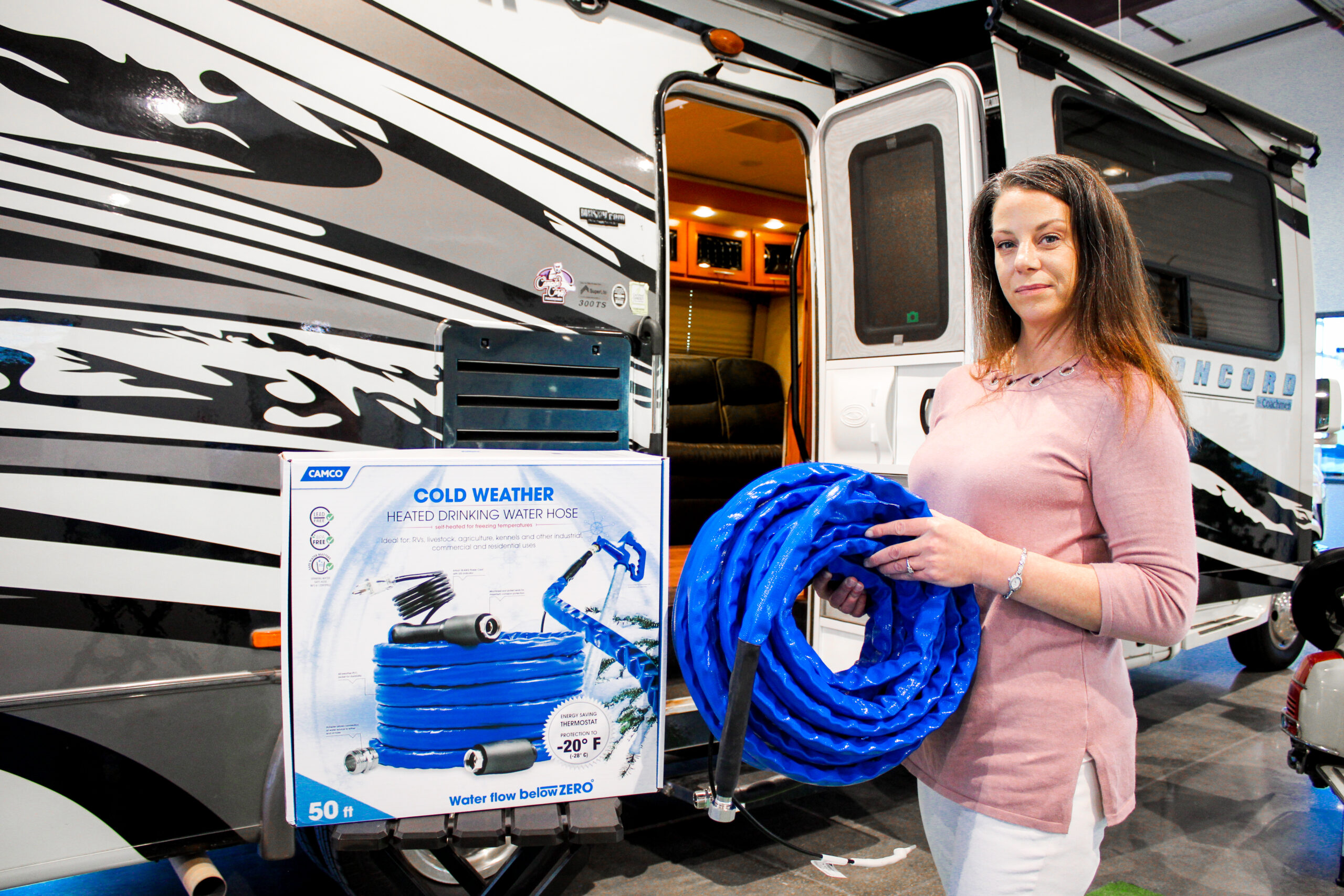
For full-timers connected to campground water supplies, a heated water hose is worth every penny. These specialized hoses have built-in heating elements that prevent freezing even in sub-zero temperatures. They allow you to maintain a continuous water connection without the daily hassle of filling fresh water tanks.
Combine a heated hose with a water pressure regulator and filter, and you’ll have a reliable water supply all winter long. Just make sure to plug the heating element into a reliable power source.
The “Poopsicle” Problem: Managing Holding Tanks
Here’s an unpleasant reality of winter RV living: if you stay connected to a full hookup sewer connection 24/7 in freezing weather, you risk creating what’s colorfully known in the RV community as a “poopsicle”—a frozen blockage in your sewer line.
The solution: Don’t leave your black tank valve open continuously. Instead, let your tanks fill to at least 2/3 capacity before dumping. The volume of liquid helps prevent freezing, and the warmer waste helps keep everything flowing. Add RV-specific holding tank treatments designed for cold weather, which often include antifreeze properties.
For gray water, you can be more flexible, but in extremely cold conditions, consider treating it the same as your black tank.
Maximizing Heat Efficiency and Comfort
Keeping your RV warm in winter requires a multi-layered approach. Relying solely on your furnace will drain your propane budget and may not keep you comfortable during the coldest nights.
Master Your Heating Systems
Know your RV’s forced air furnace inside and out. Understand exactly how much propane it consumes per hour of operation. Most RV furnaces are LP hogs, burning through tanks quickly in sustained cold weather. Calculate how long your propane will last based on expected usage, and plan your refill schedule accordingly.
If you’re using supplemental electric heaters—and you should be—familiarize yourself with their power draw and ensure you’re operating within your campsite’s electrical capacity. Most RV parks provide 30-amp or 50-amp service, which limits how many high-draw appliances you can run simultaneously.
Optimal heating strategy: Run your LP furnace at a baseline temperature of around 45°F as a safety backup. Use electric ceramic heaters as your primary heat source for living spaces. This combination approach saves propane while maintaining reliable warmth. Electric heat is typically cheaper than propane when you have shore power, and it doesn’t deplete your tank reserves.
Critical safety note: When using any supplemental heaters, maintain clear space around them. Keep bedding, curtains, clothing, and all combustible materials at least three feet away from heat sources. Check manufacturer specifications for proper clearances and never leave portable heaters unattended while sleeping during winter RV living.
Insulation Tactics That Make a Real Difference
Window coverings are your first line of defense against heat loss. RV windows are notoriously poor insulators. Cover every window with thermal curtains, cellular shades, or even emergency reflective blankets during the coldest nights. During sunny days, open south-facing window coverings to capture free solar heat.
The difference between covered and uncovered windows can be 10-15 degrees in interior temperature. That’s significant when you’re trying to stay comfortable and control heating costs. Many full-timers use multiple layers—cellular shades for daily use, plus heavy curtains or reflective insulation for the coldest nights.
Ceiling vent insulation: Most RV ceiling vents are single-pane plastic with minimal insulation value. Cut rigid foam insulation to fit snugly inside each vent cover. This prevents massive heat loss through the roof. You can remove them easily when you need ventilation, but during winter, they’re essential.
Measure each vent carefully and cut foam board insulation (available at any hardware store) to fit. Many RVers cut them slightly oversized so they wedge in place without additional fasteners. A $20 sheet of foam board can insulate all your vents and dramatically reduce heat loss.
Seal air leaks: Walk around your RV with a stick of incense on a windy day. Watch the smoke—anywhere it wavers or gets sucked toward a wall, you have an air leak. Seal these gaps with appropriate RV sealants or weather stripping. Common leak locations include:
- Around entry doors and emergency exits
- Slide-out seals
- Around exterior storage compartments
- Plumbing penetrations
- Electrical conduit entries
Even small air leaks compound to create significant heat loss. Sealing them is one of the most cost-effective winterization steps you can take.
Strategic Site Selection
If you have any choice in where you park, position your RV to maximize sun exposure. Southern exposure allows the sun’s rays to warm your RV naturally during daylight hours, reducing heating costs and giving your furnace a break.
Even in winter, solar gain through windows can raise your interior temperature by 10-20 degrees on sunny days. This free heat is valuable—take advantage of it. Avoid sites heavily shaded by trees or buildings on the south side. While shade is valuable in summer, it’s your enemy in winter.
Northern windbreaks are helpful—trees, buildings, or terrain features that block cold north winds can significantly reduce wind chill effects on your RV. If you’re choosing between sites, prioritize southern sun exposure over northern wind protection, but having both is ideal.
RV Skirting: A Game-Changing Investment
Skirting your RV might be the single most effective winterization step for full-time residents. Skirting creates a barrier around the bottom of your RV, trapping heat underneath and preventing frigid wind from blowing directly against your floor, tanks, and plumbing.
DIY skirting can be as simple as:
- Rigid foam panels cut to fit and secured with stakes
- Heavy-duty tarps attached to the RV’s frame
- Purpose-built RV skirting kits with snap-together panels
- Straw bales stacked around the perimeter (rustic but effective)
Commercial skirting kits range from $200-$800 depending on size and quality, but DIY options can cost under $100 if you’re handy. The investment pays for itself in reduced propane consumption and peace of mind about frozen pipes.
Critical skirting safety rule: Never cover exhaust vents, furnace intakes, or your vehicle’s exhaust tailpipe. Carbon monoxide poisoning is deadly. Maintain proper clearances and regularly check for snow accumulation that might block these critical ventilation points.
Leave at least 6 inches of clearance around any exhaust outlet and check daily during snow events. Properly installed skirting can reduce heating costs by 30-40% while dramatically decreasing the risk of frozen pipes and tanks.
Additional Winter Living Essentials
Minimize Door Openings
Every time you open your entry door during winter RV living, you dump warm air outside and invite cold air in. Plan your entries and exits to minimize door openings. When you do open the door, do it quickly. Consider adding a heavy curtain just inside the door to create an air lock effect.
Some full-timers install a second tension rod with a thermal blanket or heavy curtain 12-18 inches inside the door. This creates a vestibule effect—when you open the main door, the interior curtain prevents direct cold air intrusion into your living space. It’s a simple modification that makes a noticeable difference.
Electric Blankets and Layered Bedding
Electric blankets aren’t a luxury in winter RV living, they’re a necessity. They allow you to stay comfortable while keeping your overall RV temperature lower at night, which saves propane and electricity. Layer your bed with multiple blankets so you can adjust for comfort regardless of how cold it gets during winter RV living.
Consider these bedding strategies:
- Flannel or fleece sheets as a base layer
- Electric blanket as your primary heat source
- Comforter or quilt on top for additional insulation
- Extra blankets within reach for exceptionally cold nights
Many full-timers keep their RV at 55-60°F overnight and rely on electric blankets for personal warmth. This approach can cut heating costs in half compared to maintaining 70°F throughout the RV all night.
Vehicle-Specific Winterization
If you’re living in a motorhome, don’t forget vehicle-specific winter preparations:
Windshield washer fluid: Use fluid rated for the lowest temperatures you’ll encounter. Regular summer-blend fluid will freeze and potentially damage your washer system. In Texas, negative 20°F rated fluid is probably overkill, but in northern climates, you need serious cold-weather protection.
Check your fluid reservoir before winter sets in and flush out any summer fluid. The cost difference between summer and winter fluid is minimal, but the consequences of frozen washer systems can be expensive.
Diesel fuel additives: If you have a diesel pusher motorhome, use a diesel fuel supplement in every tank during winter. These additives prevent diesel fuel from gelling in cold temperatures, which can leave you stranded or cause expensive fuel system damage.
Diesel fuel begins gelling around 10-15°F, depending on the blend. Additives lower the gelling point significantly and prevent wax crystals from forming in your fuel lines and filters. Add the supplement before filling your tank for proper mixing.
Monitor Propane Levels Religiously
In winter, you’ll burn through propane faster than any other season. Never let your propane tanks drop below 20% if you can avoid it. That last bit of propane contains more impurities and moisture, which can cause regulator problems. More importantly, running completely empty in freezing weather means your heating stops just when you need it most.
Keep a backup propane source if possible, and know where the nearest refill stations are located. Some full-timers keep portable propane heaters and camp stoves as emergency backups if their main system fails.
Calculate your typical propane consumption during the coldest weather. If you’re burning through a 30-pound tank every 3-4 days, you know you need refills twice weekly. Don’t wait until you’re down to fumes—refill proactively based on your consumption pattern.
Snow and Ice Management
If you’re wintering in snow country, keep your RV’s roof clear of heavy snow accumulation. Most RV roofs aren’t designed to handle significant snow loads. Excessive weight can damage roof structure, cause leaks, or even collapse roof sections in extreme cases.
Use a roof rake (the kind designed for houses) to gently remove snow without damaging your roof membrane. Work from the ground whenever possible rather than climbing on the roof, which is dangerous in winter conditions and can damage your roofing material.
Keep snow cleared from:
- Around your entry door and steps (for safety and ease of access)
- Underneath your RV, especially near tanks and pipes
- Around your exhaust outlets (carbon monoxide safety)
- Near your electrical hookup and fresh water connection
- Around your propane tanks and regulators
Create pathways to all critical access points—your utility connections, propane tanks, and entry doors. Pack down snow to create solid walkways rather than trying to clear it completely. Ice melt products safe for RVs can help with icy steps and walkways.
Why Choose RV Depot for Your Winter RV Living Needs
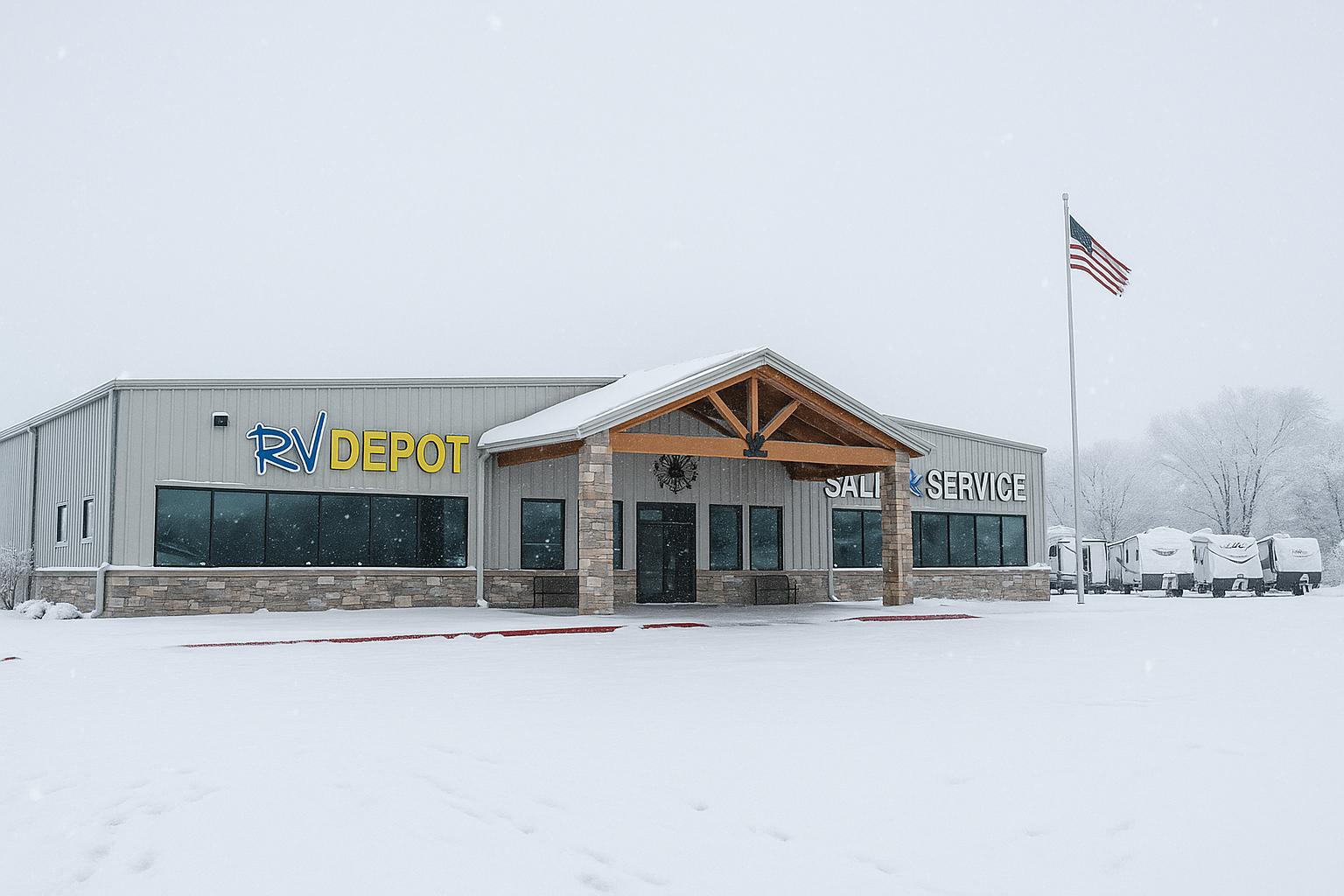
At RV Depot in Cleburne, Texas, we understand that your RV is more than a vehicle—it’s your home. Our team has extensive experience helping full-time residents prepare for winter, troubleshoot cold-weather problems, and maintain comfort throughout the coldest months.
We offer:
- Parts and accessories: Everything you need for winter RV living, from heated hoses to insulation materials
- Heating system service and repair: Keep your furnace running reliably all winter long
- Plumbing protection: Installation of heat tape, tank heaters, and other cold-weather protection systems
- Emergency repair services: When winter throws you an unexpected problem, we respond quickly
Our location advantage: Cleburne, Texas offers moderate winters compared to northern states, making it an ideal home base for full-time RV residents. While we do experience freezes requiring winterization, you won’t face the extreme conditions of northern climates.
We recognize that full-time residents can’t simply store their RV until spring. You need practical solutions that keep your home functional, comfortable, and safe throughout winter. Our service approach reflects that reality.
Real Talk: The Reality of Winter RV Living
Winter RV living isn’t for everyone, but thousands of full-timers do it successfully every year. The key is accepting that it requires more attention and maintenance than summer living. You’ll check systems daily, monitor weather constantly, and maintain vigilance about potential problems.
But here’s the reward: You maintain the freedom and affordability that drew you to RV living in the first place. You’re not tied to a traditional home with a mortgage and property taxes. You have flexibility that homeowners don’t. And with proper preparation, your winter comfort rivals any stick-and-brick house.
The learning curve is real. Your first winter will teach you things no blog can fully prepare you for. You’ll discover your RV’s specific quirks, learn exactly where cold air infiltrates, and develop a routine that works for your situation. By your second winter, you’ll be an expert, helping other newbies navigate the same challenges you’ve mastered.
Take Action Before the Freeze
Winter preparation starts before temperatures drop. Don’t wait for the first hard freeze to discover your RV isn’t ready. Start implementing these strategies now:
- Schedule a pre-winter inspection at RV Depot to identify any vulnerabilities
- Gather all winterization supplies before stores sell out of popular items
- Test your heating systems under load to ensure they’re functioning properly
- Create your emergency plan and stock emergency supplies
- Budget for increased winter costs so unexpected propane bills don’t catch you off guard
Your Winter RV Living Partner in Texas
Whether you’re new to full-time RV living or a veteran facing your tenth winter on the road, RV Depot in Cleburne, Texas is your local expert resource. Stop by our location to:
- Browse winter RV supplies: See heated hoses, insulation materials, and heating options in person
- Consult with our service team: Get personalized advice for your specific RV model
- Schedule winterization services: Let professionals prepare your home for cold weather
- Shop our parts department: Find exactly what you need for DIY winterization projects
- Explore our RV inventory: If your current RV isn’t cutting it for winter living, we have better-insulated models designed for year-round comfort
Visit us at: 4319 N. Main St, Cleburne, TX 76033 📞 Call:
We serve full-time RV residents throughout Texas and understand the unique needs of people who call their RV home 365 days a year. Don’t face winter unprepared—let RV Depot help you stay warm, comfortable, and protected all season long.
Winter RV living is entirely achievable with the right knowledge, preparation, and support. You’ve taken the first step by educating yourself. Now take the next step by preparing your home properly and partnering with experts who understand your lifestyle. Your warmest, most comfortable winter in your RV starts with the decisions you make today.
Already living full-time? Share your winter tips in our Facebook community and help others succeed. Questions about financing an RV for year-round living? Our team understands your unique needs—call today.
Winterizing Your RV While Living In It 👇